
 When I was a child, I loved reading. For a long time, the only game consoles I could play on were at other people’s houses, and I’d not had a chance to become the devoted horror cinema fan that I am now (though I’d be the first to admit that horror movies aimed at an audience of children probably wouldn’t get the type of return on investment that studios look for). Instead, I had books. The first titles I actually remember reading were Roald Dahl’s books, which captivated me by being incredibly whimsical (Charlie and the Chocolate Factory) and goddamn horrifying (The Twits, oh dear Christ, The Twits). I really loved those stories; I remember once waking up in hospital from a general anaesthetic and Dad dealing with my general distress by handing me two Dahl books I’d not read yet. I’d like to be indignant about that sort of treatment, but it definitely calmed me down.
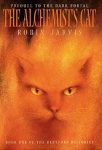
 You have to grow up sometime, though. After a brief affair with Dick King-Smith, filled with all the wistfulness of a rebound relationship (“Roald Dahl used to write books about talking animals…”), I bounced around different authors until I found a man named Robin Jarvis. If Dahl was my first and King-Smith was an unsatisfactory follow-up, then Jarvis was my leather jacket-wearing, motorcycle-riding, cigarette-smoking bad influence. This was the man who had me reading with a torch under the covers as he filled young David Spain’s head with demonic cat gods, pagan rat cults, and rats straight-up eating mice. It was as though Robin Jarvis gained an extra minute of life on earth for every child he managed to traumatise, and he wanted to live forever. In the plainest possible terms, Robin Jarvis fucked me up, something I’d like to think he’d take pride in. I can’t read A Song of Ice and Fire without thinking about him, and I’m quite certain that he was responsible for my enduring love of horror.
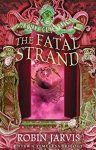 Robin Jarvis also taught me that you don’t have to write “serious stuff”. Whenever I sit down to write something new, there’s always a voice in my head warning me that I need to be mature and sensible, otherwise no-one’s going to think that I’m an adult or, even worse, a real writer. If I’d not read Robin Jarvis, I might have started listening to it. But I did read Robin Jarvis, and that man made me want to be a writer with stories about – and I cannot overstate this – mice, squirrels and bats trying to stop a cat god from plunging the world into an endless winter (don’t ask me what humans were doing during this period; it’s possible that the Gulf War had them all distracted).
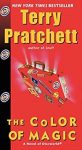
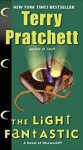
Mr Jarvis was also likely responsible for me finding the author that had the most profound effect on my life. My Dad was always extremely good at finding the best next book to read, and I can only assume that either the similarities in cover art or perhaps the fantasy connection resulted in Terry Pratchett’s The Colour of Magic and The Light Fantastic being handed to me one holiday.
If you’ve not read any Terry Pratchett, then I would very much like you to go away, and to then continue going away until you find yourself in a bookshop (this happens more than you’d think). I would then like you to find Terry Pratchett’s books, pay whoever appears to be running things a large amount of money for them, and then start reading. We can pick up when you’re done.
 If Jarvis made me want to be a writer, then Pratchett showed me the kind of writer I wanted to be. I’ve never read anyone else who manages to combine sharp humour, biting social criticism, and genuine emotion like he does. It’s almost like you’re laughing so much that the lesson he’s trying to teach you sneaks right in via the joke. Tom, my first-person narrator in A Northern Exit, owes a lot to Pratchett. Part of my Creative Writing PhD (the entire reason that I sat down and lied to myself about having what it takes to be a political novelist for three years) looked at how to effectively teach the reader about political ideas and systems when the poor bastard just wants to sit down and read a book (the real answer that question is “sex scenes”, which posed a real challenge to a former Catholic like myself). I took a lesson from Pratchett there: when they’re laughing, they don’t mind that you’re teaching them new things.
I don’t know if I’ll write a novel about politics again. At the moment, that whole business is a little bit…well, “shite” seems like an appropriate and pleasantly northern word. But everything I’ve written since has been intensely political – it’s like the literary form of a persistent venereal disease – and I’ve come to rely on the lessons that Jarvis and Pratchett taught a wide-eyed young man who thought that the words “smiled enigmatically” were the winning formula to penning a literary classic:
- Don’t let embarrassment or the desire to be seen as a “real author” stop you from writing what you want. If it helps, remember the phrase “mice, squirrels and bats trying to stop a cat god from plunging the world into an endless winter”; I’ve got it carved into my left arm.
- If you make people laugh, there’s a surprising amount they’ll let you teach them before dropping your novel and finding something sexier. If possible, make your readers laugh, teach them, and also write about sex.