 The wedding hall hummed with chatter. Men stood tall in white cotton kurta; women laughed, sparkling their kohl-lined eyes. The smell of fried fish fought the fragrance of the rose wreaths on the walls. Cameras flashed, ceiling fans moved humid air, tiny appetizer plates wheeled through hands.
Reba sat in her usual place in a chair next to the bride. Her head was bent over the list she held in her palm; accounts of gifts and givers. Rows of names neatly recorded against each gift, in her pearl-like handwriting. She had done this innumerable times, at every family wedding.
Namita, the bride, whispered into Reba’s ears. She demanded a handkerchief; beads of perspiration bubbled over the caked foundation on her face. Namita was an average looking girl, but she looked bride beautiful tonight. Reba handed her the frayed handkerchief balled inside her bra and sighed. She would not see it again. Her eyes fell on her fingers, stained with turmeric from yesterday’s cooking. The blue silk sari she wore belonged to her aunt. The studs in her ears were faux gold.
Reba was the wedding specialist of her extended family. She possessed myriad talents for doing superbly all things that weddings involved. She put together dazzling flower arrangements and her wizardry at bridal makeup was a family fame. Reba was a true artist when it came to alpana, the traditional floor-paintings on the ceremonial wedding platform. She spent hours hunched over the floor, drawing with her fingers, exquisite webs of intertwining paisleys and spirals. She was most attentive in packing the bride’s trousseau, assembling everything required for a successful honeymoon. Everyone marveled at how artfully Reba wrapped the gifts for the bridegroom’s family, in colored cellophane paper, the ornate bows and crinkle ties perfect to the minutest detail.
Reba’s aunt Mira, the bride’s mother, called her at work when the wedding date was fixed. She wanted to make sure Reba was available.
“You must come and stay with us. You know how much we need you now. Take leave from work if you have to,” she said imperiously.
Reba’s co-worker was chewing puffed rice drizzled with mustard oil and slivered onions. She arched her eyebrows, “Which cousin is it this time?”
Reba smiled abstractedly as she put down the phone, thinking of wedding things. Cashews glistening on saffron fried rice, cheap glasses spilling milky tea, shehnai playing lilting tunes. A warmth spread in her gut.
Reba arrived at Mira’s house in the morning of the wedding. She had woken at dawn in the suburban tenement she shared with her mother and brother. She splashed water onto her face from an iron bucket in the courtyard. A trickle of pleasure coursed through her half-asleep body as she thought of the day; a brief escape from the life in this decrepit home with water-shortage. Reba hated the centipedes crawling on the corrugated sheets of tin the bathroom was constructed of. The weddings were a celebration of food, splendor and luxurious showers. Her wedding relatives, as she called them, were unusually kind to her during these times. They sent home gifts and sweets. The afterglow stayed with her for a while, even when she strained to arch her naked body away from the centipedes.
The frenzy had begun by the time she arrived. Aunts and uncles ran about shouting orders. Pyramids of fresh fish glistened in the kitchen. Thinly sliced aubergines floated in a vat of lumpy batter. Namita sat surrounded by her friends and a mound of jewelry boxes. The girls oohed and aahed. No one noticed Reba. She gravitated towards the kitchen where Mira’s sister accosted her.
“Are Reba, why did you come so late? What’s so important about your work that you couldn’t take leave for a family wedding?”
Before Reba could reply, Mira arrived like a storm, shrieked at the sight of Reba and plunged into a breathless account of what needed to be done and how soon.
“Reba, my God! I don’t know what to do! The flowers came too early and all wilting. And that imbecile decorator! Set the tables all wrong! We special ordered the coconut sweets, and they sent cashew ones. What a disaster! And where have you been?”
Her ample bosom heaved; when she gulped to catch her breath, Reba spoke.
“Mashi, Don’t get stressed. I am here now. Let me take care of things,” with that she went looking for the various pieces of the jigsaw puzzle that required her attention.
Her afternoon was a race against time. She counted endless orders of sweets and fried mounds of fritters. She bedecked the wedding hall with festoons of tube-lilies till her thumbs screamed. She folded silk and satin lingerie into the bride’s bag. She filled toilet bags with rosewater and glycerin, face creams of almond scent, perfumes in bottles of gold filigree. Her arms ached and her fingertips were numb by the time she finished the alpana. Looking at the watch, she exclaimed. It was time for dressing the bride. She hurried on.
Naked bulbs were ablaze in the small dressing room. A crowd of girls jostled and tripped over each other, shouting and giggling, pulling around yards of glistening saris, petticoats fastened to their unblemished waists. The saris fell to the floor like cascading rainbows. Jasmine garlands in their hair dropped white petals. In the midst of the unrest, Reba took her place, and began working on the bride’s face. Her steady hands rubbed foundation, drew dark lines around the eyes, and a perfect bindi ringed by curlicues of sandalwood paste.
The father of the bride came in to announce the arrival of the bridegroom. The girls ran out of the room like a pack of gazelles, springing and leaping onto the air, vanishing in a split-second. Soon the bride would be sent for. Reba started with the jewelry, fastening chandelier earrings, draping layers of necklaces, slipping on the carved bangles. She inspected her finished work and congratulated herself. Namita was the butterfly. She was led away by her father.
The room was now empty. Reba let out a long sigh and looked at her lap, scattered with torn pieces of scarlet roses. Her face floated in the wood framed mirror. The bulb over her head emitted fierce light, refusing to hide anything. Reba saw listless skin stretched over an oval face. Her eyes stared back in surrender.
She ran the comb through her hair, streaked with gray and washed with cheap detergent. She wrapped on the blue silk sari, savoring its caressing softness. She sprayed perfume behind her ears and then a little onto her cleavage, where the skin was still taut.
Reba was not pretty, but her eyes were petal shaped, her skin the color of bulgur. She danced in the rain when she was young. Her long hair spun around like a fan of black snakes. She pouted her wet lips, fluttered water off her eyelashes and laughed. She felt beautiful.
Reba knew what it was to be perennially on the threshold of poverty. Her father worked odd jobs while seeking his fortune in an acting career in the theater. He randomly changed jobs or got fired. Marginal acting roles brought little money. He railed at the world for not recognizing his talent. Reba’s mother, who was a woman of little strength and great disappointments, chose bitterness. Her tender eyes became hard as her brain turned reptilian. Reba spent her childhood summers with benevolent aunts, helping with house-hold chores, feeding and bathing babies. She learnt to haggle over the price of fish and cauliflower, make meals for her younger siblings before rushing off to school. She emerged as the breadwinner when she turned 20, the year her father succumbed to a bad heart and broken dreams. Her job as a clerk in a government agency was an act of charity from a distant cousin with connections. Her youth went in a blink, devoured by family responsibilities. At forty-six now, Reba stood up and leaned over the mirror to examine her face. She mumbled, “This face is going nowhere.”
Her uncle’s loud voice called out for everyone to gather at the wedding hall. She ran into Mira, who gave her a pen and a notebook.
“Don’t miss any names Reba,” she said. That was another thing Reba always did.
“One plastic flower-vase – Mrs. Ray, neighbor.”
“One glass fruit bowl – Maya, school friend.”
“One navy blue silk stole – Rina Auntie.”
Her list grew by the minute. She placed the unwrapped gifts in a cardboard box, her hands moving mechanically. Another package fell into her lap, something soft. She ripped the marbled paper; it was a cheap wall hanging. Two crude blue birds stitched on a rectangle of jute. The birds sat face to face, their beaks touching. Above the birds an embroidered line in chain stitch said, “Home Sweet Home.”
Reba sat paralyzed. She couldn’t take her eyes off the birds. The crowded hall receded; the chatter became faint. She stared at the piece of cloth in her lap, her eyes barely blinking. The birds whispered to her; a storm erupted in her head. Feelings, sharp and muddy at the same time, funneled in a vortex within her.
Namita dropped another gift into her lap. “Put it away, Reba,” she barked. Reba started on the list again but her mind refused. She didn’t want to catalog objects she would never have. She felt a sharp stab of resentment; she wanted to throw the writing pad at Namita’s face.
“One photo-frame – teacher from music school.”
Reba ground down the pen, a hole tore through the paper. A tight band pressed her rib cage. She closed her eyes, breathed in and out.
“Are you feeling alright?” Sheila, a cousin, inquired.
“I am okay,” Reba said hurriedly. She smoothed out the wrinkles in the sari over her thighs. A charge coursed up through her legs, meeting her fingertips.
“Come on, Reba, go get some dinner! You must be hungry! I shall stay at your place,” Sheila insisted.
The food tasted like water. And there were all these people, talking to her, inquiring after her mother’s health, complimenting her work. Reba stared vacuously; the birds occupied her mind, their beaks locked in love. Reba felt dizzy and ill.
After the last guest departed, Mira threw herself into a folding chair. It was time to leave.
“Reba, make sure all the gifts are taken,” she said.
Reba carried the cardboard boxes to the car. She knew which one held the birds. Under the yellow glow of the street lamp she opened the box. A warm flow crawled down her belly as she pulled out the fabric. Her heart thumped; her fingers were cold. She held it to her chest for a quick minute before shoving it into her handbag. As she walked back, the bag moved under her armpit. She sensed faint flapping, kicking. She hurried back. Outside, street dogs fought over half-eaten food in the garbage dump; beggars waited with expectant eyes.
The drive home was agonizing. Reba held the bag tightly in her lap. At times she felt like leaping out of the car to escape the maddening prattle of her cousins and aunts. She didn’t care about whose sari was hideous, who tried to pass off cubic-zirconia as diamond, and whose husband took bribes.
She asked to leave as soon as they reached.
“Why do you want to go back now? It’s so late in the night! Why not tomorrow morning?” her aunt was incredulous.
“Mira Mashi, I have to work tomorrow. I must leave now. I cannot wait. Please, ask the driver to take me home.”
“What’s the big rush? You really are being very inconsiderate, Reba,” Mira lost her cool.
Despite the protests, Reba left. The car drove through the silent streets; headlights fell on prostrate bodies of pavement dwellers. Reba’s spine tingled with the sweet thought of being alone with the birds. At times, she put her palm on the bag trying to feel a heartbeat.
Her mother and brother were surprised to see her. Her mother wanted to know all about the wedding.
“How tall is the groom? What does his father do? How much gold did they give the girl?”
Reba gave perfunctory answers, then locked herself in the bathroom. She rested her face against the dank wall and stayed.
The house was quiet when she emerged and tiptoed towards her room, a converted corridor. She pulled the handbag from under the bed where she had hidden it. The birds tumbled into her lap, their eyes grateful in release. Reba cradled the fabric in her arm, saw a forgotten nail on the wall and hung it with gentle care.
She lay down on the bed, her eyes fixed on the birds and murmured under her breath, ‘home sweet home.’ She wrapped her arms across her chest; longings leaped like tiny geysers inside her.
She wanted to discern what was happening to her. But her hands ignored her head and moved over her belly, touching, stroking. She closed her eyes tight and saw faces of men; bridegrooms who held their bride’s palms over the holy fire. Reba smelled jasmine garland in her hair, sandal paste in her palms. A man held her; the short hair on his chest brushed against Reba’s naked breasts. There was love and wonder in his face.
Reba entered her motion picture. She woke up next to a man in an island cabin; long eyelashes splayed like feathers on his face in the morning light. She held his hand and walked on a beach throbbing with tiny mollusks burrowing into the sand. She rode pillion on his moped, rested her head on his back, his shirt smelling of Aqua Velva and sweat.
Her head flooded with the faces of the brides she had prepared with care. She made fists and felt the softness of the bridal veil and the hardness of the gold bangles. Reba heard her name being whispered into her ears with puffs of electrifying breath. Her fingers traveled and searched. Her body heaved and arched. She mumbled hushed words of belonging.
The movie ran out at last. She opened her eyes. The birds were laughing at her. Their beady eyes were jeering. Reba, the harbinger of wedded bliss was empty.
“Empty, empty,” the birds mocked.
No man had ever kissed her lips with love. There was never going to be love on an island.
“Reba,” her mother told everyone triumphantly,“ takes care of us. And marriage? What a ridiculous idea! How could she marry and abandon us?”
Hot tears started to escape her eyes. Tears that burnt her cheek and carved a hole in her little heart. She stifled her cries by crushing her mouth against her pillow. Her mind raged at God for her fate, at the world for using and exploiting her, at her mother for not truly loving her. Every little cell of hers burnt with self-pity. She lay there, convulsing with sobs, her hands trembling like desiccated leaves in an autumn downpour.
At last her body gave up, if not for dearth of tears, but from sheer exhaustion. Reba lay motionless on her bed till dawn broke. At the first birdcall, she got up and took a few stumbling steps towards the wall. The birds were silent. She took them down gently, running her hand lovingly over them. Then she walked to the kitchen. In the farthest corner stood an old bucket full of trash, most of which was used to start the coal fire. She thrust the wall hanging deep into the pile, covering it with torn envelopes and milk cartons. Then she turned away and left.
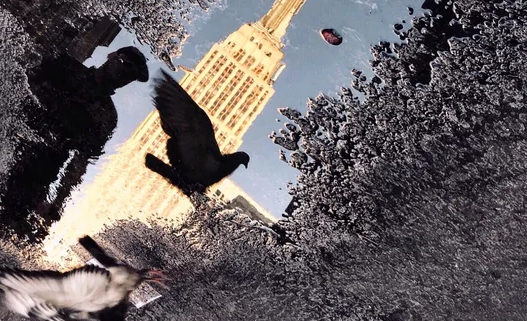
Photography Credit: Jason Rice (detail)
Sreedhara Bhasin turned to full-time writing in 2018 to complete her debut novel – Touched By Fire. Her personal essays are on her blog: https://sreeatlarge.com