
 I was a lonely child who read Enid Blyton sitting under a guava tree in our rambling house in Calcutta, India. I wanted noting more than to be one of the Secret Seven sleuths and have a dog called Scamper. Being forcefully recalled indoors for lunch, I would eat fried bitter gourd and imagine nibbling on jam tarts.
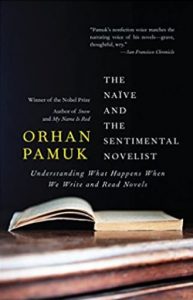
Orhan Pamuk, in The Naïve and the Sentimental Novelist, commences the first essay with the statement, “novels are second lives,” and as a reader I chose to live those. The paradox is delightful. Novels are made up of imagination and words, yet the vicarious reality consumes us, moves us and feels like a matter of enormous significance.
All of us read fiction in different ways. We read with factual cognition, visual cues, wanderlust, cultural dispositions and individual predilections. I read mostly with my heart, propelled by my emotional attachment to the protagonist. I search and struggle, go from despair to jubilance, along the contours of the plot. To this day I find it amazing how immediate and strong my connection was to Anna Karenina when I read it for the first time.
A young girl in a tropical landscape, raised amidst indigenous literature frequently dealing with poverty and post-colonial realities mustered seamless empathy for a society woman in Czarist Russia. Reading to me is still the same, an immersive experience. Except now I understand that the stories I read so avidly are also my stories. Fiction gets its seed and fruition from the reader. The stories that fascinate me are nuanced and completed by my own culture, expectations, memories, preferences, experiences, desires and social upbringing. I complete the stories with little parts of my own self.
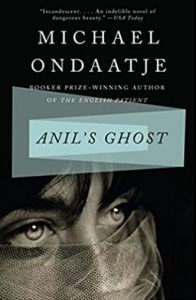
I read voraciously through my childhood and youth. I admired E. M. Forster’s faith in the redemptive nature of human beings. I felt Hemingway’s magnetic pull, and Madame Bovary’s yearnings. The edge of Heart of Darkness left me breathless. I read Anton Chekov, Hermann Hesse, Gabriel Garcia Marquez, Agatha Christie, Somerset Maugham, James Michener, Toni Morrison, and many others. I marveled at how those stories influenced me, and changed me from within. Much later, I read Michael Ondaatje; The English Patient and Anil’s Ghost. The heartbreak he invoked in me was almost atavistic. He remains one of my most beloved authors.
I came to America as a graduate student to study Political Science. I wanted very much to belong to the fraternity and started practicing, the phrase unbeknownst to us then, “code switching”. In the process I acquired an exciting new world but felt severed from my cultural womb. I started writing at a time when a gnawing disquiet began troubling me. I felt I couldn’t be myself. My world was ruptured; I belonged nowhere. I took to writing and unleashed the stories bubbling in my mind without much care about the craft. Those stories slept in my laptop.
But I fell in love with the process of writing – it was a journey and again, a life of my conjuring. Pamuk says a good novel evokes in us a sense of that profound knowledge of what it means to exist in this world. When I write, I feel connected to something much greater, an invisible universe perhaps; I exist exultantly.
I also cherish the lullaby-like effect writing has on me, chases away dark clouds and clears everyday cobwebs. Writing makes me feel that there can be an endless source of love. A source that never turns on you, never falls prey to cancer, never makes you feel small.
I worked in education technology for years and undertook projects outside America. It is then I clearly understood the unifying effect of literature. As readers we are free to read with empathy, without social obligations, religious distinctions, geographical boundaries, partisan affiliations and normative judgment. Books are a liberating and democratic experience. Books had already made the world flat.
 My cherished authors helped shape my identity. When I read them in my youth, I felt they were clairvoyant. How did they know thoughts and ideas that swirled in my head? My mind jumped while reading dialogue they wrote, as if those words were written right after having a tête-á-tête with me. They knew me better than my family at times. They knew my angst, my secret desires. It was incredible, at times uncanny, a cosmic connection almost.
Writing turned me into a deliberative and deferential reader. The blood and sweat, the brilliance of great construction, the subtle fusion of the reflective and the spontaneous had eluded me earlier. The use of sensory cues, the imagery-filled descriptions, the rise and fall of tension, the unfurling of the plot through a gathering motion towards the end are beautiful parts of why we want to turn the page. If only life had as many AHA moments as literature does.
My writing is a work in progress. I write because I want to tell stories. I hope my readers will complete those.