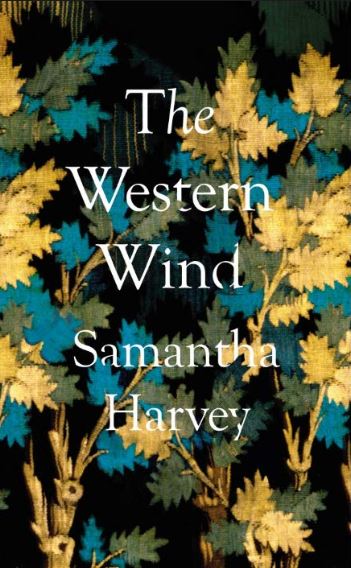
December reads are special. I usually remember one hallmark book that I read each holiday season. With the headlong year’s end, there’s an increased emotional and spiritual heightening that shouldn’t be wasted. We read in a context of family and friends, both existing and absent. It’s a season of ghosts and ghosting, mists and chills.
It’s 1491, a year of terminus. Terminus was the ancient Roman god of boundaries, a very important god, although not well known. The English village of Oakham is raked with termination points. The bridge across its flood-tide river, built at great expense through the patronage of Oakham’s leading citizen, Thomas Newman, has washed away. On the other side of town, an intervening ridge encourages isolation.
The washed-out bridge chills commerce and isolates the village from pilgrimage routes. Hardly anyone new is to be seen. Everyone is known but perhaps not well known-except to Oakham’s spiritual leader of tenuous authority-its priest John Reeve. The word “Reve” can mean chief magistrate, town council leader, or God’s deputy in Anglo-Saxon England. And there is a person with that official title in Oakham. But the church expects that its installed priest, John Reeve, truly fulfills that role.
Oakham’s inhabitants are widely considered to be losers. The neighboring monks of Bruton have their eyes on Oakham, hoping to acquire its rich agricultural lands for an expansion of their monastery enterprises. Grasping acquisition has been made easier by the concentration of land in the hands of a single owner, Thomas Newman. Newman has been buying up the property of the second largest landowner, Townshend. Townshend has been bleeding money for years and has been selling his land for ready cash.
Townshend’s most recent scheme has been to make Oakham a leading cheese producer. John Reeve knows that cheese is mainly consumed by the poor. If Townshend wanted to prosper, he should be producing sugar, a luxury crop. Townshend’s lack of commercial insight reinforces Oakham’s loser image.
On another rain-soaked deluge of a night, Herry Carter, Newman’s protege, wakes Father Reeve, who has been sleeping in the confession booth, to the alarm that a man has been washed away in the torrential river.
The victim has been washed away twice. First Herry saw the man jump, fall, or be pushed in, next he came across the body further downstream entangled in some rushes. But when Herry goes back to check, the man has washed away again. All that remains is a tangled shirt. Herry thinks the man was Thomas Newman. John Reeve will end up summoning the dean of the region for assistance. The dean reminded me of a more acerbic and threatening medieval Columbo.
The Western Wind takes place over four days in reverse order from Shrove Tuesday backwards. That is, each day and night proceeds in forward motion, then the day before is presented until we reach Shrove Saturday. While the characters, proceeding backwards, each day know less, the reader, moving forwards through the story, each day knows more, even though time is moving backwards.
Father Reeve thinks that God can make time move forwards or backwards, and perhaps the human heart, recovering from its losses, can as well. Reeve also has what is probably the first confessional booth in England, having heard about this invention in Rome. His confession cabinet is hobbled together.
In traditional confessions in this era, the confessor would kneel before the priest in public and everyone could hear their confession. The main advantage of the booth is that the confessor can’t see the priest, and this makes contrition easier. Father Reeve also thinks that this may be why we can’t see God. God’s occluded face is an act of compassion.
The language and intelligence, the sensitivity and being-there medieval imagery of The Western Wind would rank it high on a list of ingenious literary works. It’s critical to this sensitive display of the medieval European mind on the verge of axial change that Thomas Newman died without receiving the last rites of the church. And what was that last conversation between Father Reeve and his friend Thomas Newman like? That discovery is placed at the end of The Western Wind, where backwards turns into forwards.