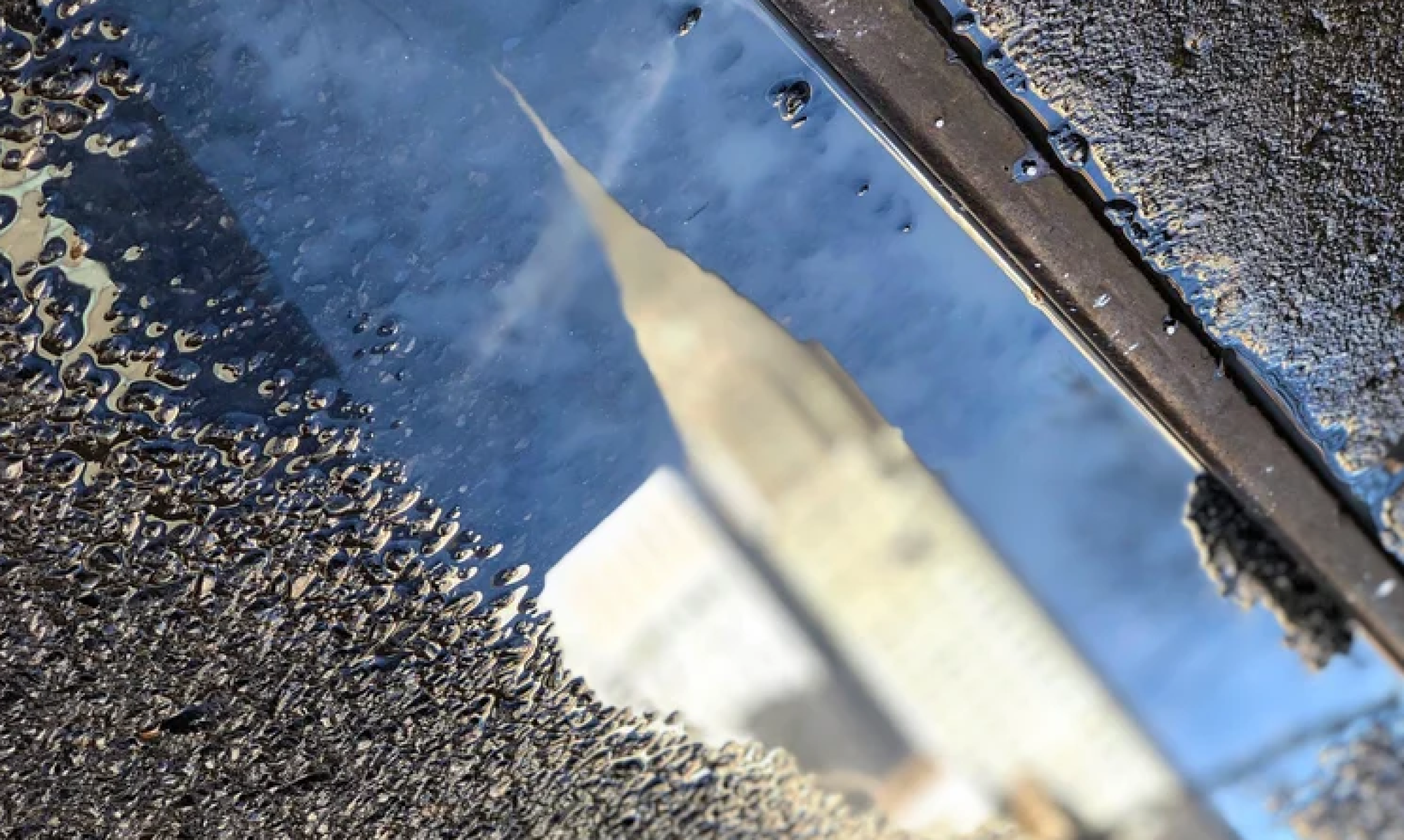

It is tempting to think of writers as romantic beings, creatures who spend hours behind swishing curtains that drift from a window overlooking the sea. Or a twinkling cityscape. Mug of tea steaming ever on the sill. And these writers are many. But many more are those whose computer sits with its back to a bare wall. Because it’s not what’s beyond a window that must be transcribed into carefully selected words and sewn together in assiduously constructed sentences. It’s about what’s on the other end of the computer, beyond hands working feverishly to transcribe thoughts. It is lovely to peer above the rim of a screen at the outside word. But it is lovelier still to feel the sights and sounds and smells within and put them on the screen in such a way that the reader finds joy in experiencing them.
I am of the latter camp. My preferred setting is solitude and silence and a room free of ornamentation and distraction. Sometimes I write at a desk. Sometimes, on the couch. Or in bed. Wherever I can position myself to be one with the laptop, my keyboard and I trading thoughts and my eyes on the screen without cease. What could be more intimate than that?
But in the case of writing things lovely and romantic, there should always be a pragmatism to what makes the final cut. And to what is left off the page. Years ago, as a fledgling writer, I had an editor remark that it sounded as if I was trying to be “too literary.” The lesson? Not all potpourri smells good. Only by being honest about how your writing sounds when you read it back may you develop a palate that enables you to produce work that is pleasing for others to read. Do not empty your cupboards into a pot and let it all simmer. What you leave out is as important as what you put in.
I am reminded of one of my favorite books, Train Dreams, a novella by the late Denis Johnson. This story follows a lonely soul through his life in the Idaho Panhandle in the early part of the last century. The first sentence introduces us to the catalyst for the story, the character and his plight. No background, just a hard start into this gritty and heartbreaking tale of a man whose world is changing faster than he can process it. Meticulously researched but tightly constructed, there are no wasted sentences. Historical accuracy, a stunning sense of time and place, and a twist of the mystical accompany us throughout. We are not bludgeoned with fatty sidenotes or bored with superfluous detail. We are left to infer based on what we are given, and that is the finest of the writer’s gifts. We crave more. But we are given just enough to be left to imagine those things for ourselves. And if you can do that as a writer, your reader will be one with the pages you have given them, and what could be more intimate than that?
