David
I’d spent the last three summers standing over a hot grill in a white apron watching the cheese melt on ten thousand burger patties. This year was going to be different. During the summer of 1991 there would be no clocking in and clocking out, no grease burns, no complaints about under or overcooked burgers and nobody telling me to scrub the floors or clean the walk-in cooler.
Thanks to a grant I had gotten from the History Department at my university, I traded that mind-numbing food service job for a freelance gig photographing and documenting the historic barns in the rural township in Michigan where I had grown up. If it all went according to plan I’d earn a little more than I did at the restaurant in half as many hours without having anybody peering over my shoulder.
The truth is I wasn’t at all interested in rural history and didn’t know anything about barns or photography. I was nineteen and my favorite pastimes were drinking beer and trying to meet girls. This gig and the money it would provide were merely a means to an end. If I’d had to pay for my own truck and camera I would have been better off flipping burgers. But since my parents thought the project might look good on my resume they let me use Dad’s old truck and Mom’s 35-millimeter Minolta camera. Gas, film and photo development costs would be my only expenses.
My friend Ben was the first person my own age who I told about the opportunity. We’d gone to high school together and he was taking classes at the local community college and working full-time as a waiter at the same restaurant where I had worked during the last few summers. After his shift was over on Friday night, we met in the basement of the Blind Pig in Ann Arbor to shoot pool. If you’ve seen the Breakfast Club, Ben was a more charming version of the mischievous John Bender played by Judd Nelson and I looked like the straightlaced Brian character played by Anthony Michael Hall. No matter how many Marlboro Reds I smoked or how hard I tried to look cool, I still felt as awkward as a Mormon missionary smoking his first cigarette.
“Barns? Are you fucking serious, Dave? You are going to be bored out of your mind. Wouldn’t you rather hang out with us all summer again at the restaurant and listen to music and flirt with the waitresses?”
I won all three games of billiards, but Ben later declared victory on the dance floor upstairs and disappeared with someone he’d just met. It wasn’t the first time he’d ditched me for a girl, so I finished my Coke and smoked my last cigarette on the walk back to my truck. I took the backroads home to Almes township. The headlights of my Ford F-150 cut a narrow path through the darkness casting intermittent shadows on the waist-high corn fields that filled the expanse between roads and houses. With the windows completely rolled down I breathed in the cool summer air and listened to the classic rock station on the radio over the sound of chirping crickets. It would be a few weeks before I saw Ben again.
Almes township must have been the flattest thirty-five square miles of farmland in America. I’d lived there my entire life but before this project began I’d never really paid attention to the fact it was laid out like a grid with a few paved horizontal mile roads and a lot more rutted dirt roads running in different directions. Most of the dirt roads were in such bad shape that it was impossible to even drive the posted speed limit without seriously damaging your suspension.
The only part of Almes township that wasn’t completely flat was the landfill. Over the years it had grown tall enough that it was visible from most parts of the township. In exchange for having a big stinky dump in the middle of our little bucolic community, residents were given complementary VIP access. We got the full sanitation worker experience, and they let us drive up to the very top of the rubbish heap alongside the city refuse trucks and hurl our trash bags in the direction of the unfortunate flock of lost seagulls that called that place home.
Every other week I’d meet my project advisor on a Friday afternoon in Ann Arbor at a different bar. She was on a first-name basis with all the waiters and bartenders, so I am pretty sure that our project meetings weren’t any special occasion for day drinking. But she was an amazing professor and a genuinely nice person, so I felt very fortunate to have her overseeing my project.
During our third meeting, at an outdoor bar called Casa Dominick’s, I shared the results of my first few weeks photographing barns. I spread seventy-two exterior photos of different barns on the picnic table a safe distance from her half-finished pitcher of Molson Canadian.
“Dave, some of these are nice, but you need interior photos of at least a couple of these barns so that people can appreciate the craftsmanship and understand how they were built. Figure out how to get inside a few of them.”
Had she not pushed me, I would have glided through the rest of the summer using my telephoto lens to capture grainy images of nearly indistinguishable barns from a safe distance. Had she not pushed me, I also would never have met that crazy old guy named Jokūbas.
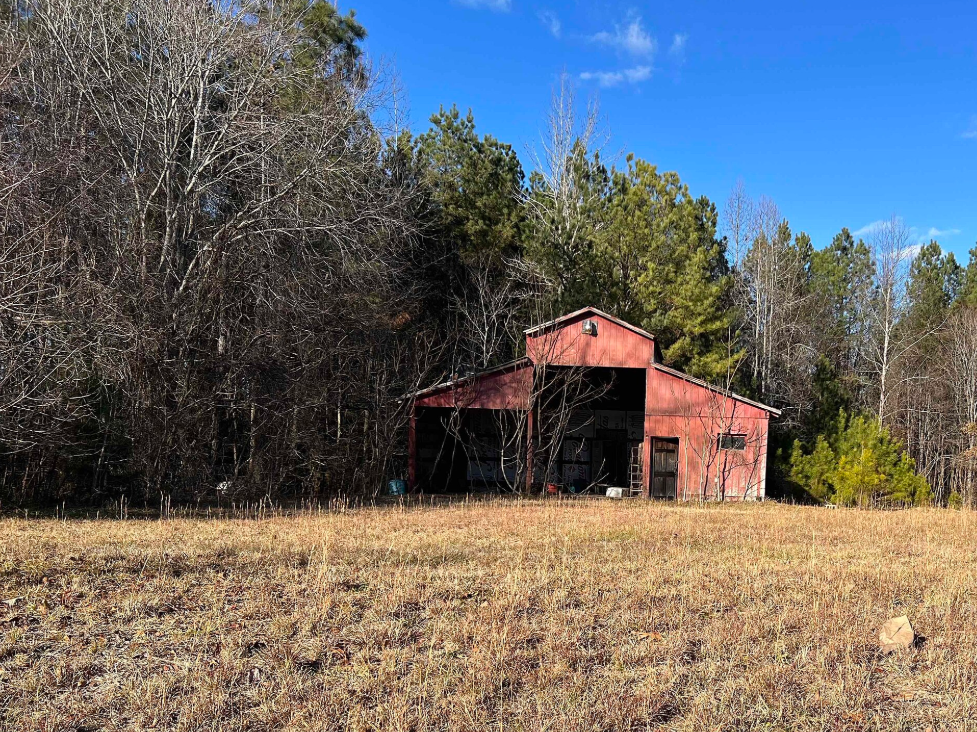
On Monday morning I set out with my map and camera to photograph barns in a new quadrant of the township. In the back of my mind, I was thinking about how I would get the interior photos that I needed for my advisor. As any slacker knows, efficiency and laziness are two sides of the same coin. So, when I saw the old man out on his riding mower in the front yard of a property with a big white farmhouse and red gambrel roofed barn it occurred to me that I wouldn’t even need to get out of my truck to ring a doorbell. I immediately turned into his gravel driveway and started rolling down the window.
The old man pulled up alongside my truck with a puzzled expression on his face and killed the motor on his green John Deere lawn tractor. Picture a white-haired version of one of the famous Van Gogh self-portraits. Except the old man wasn’t wearing a straw hat or even a shirt for that matter, just denim overalls and shiny black dress shoes without any socks.
“Good morning Sir, how are you doing today?”
“Fine. You want to help me find Lina?”, he replied.
“Sure. What does Lina look like?”, I responded.
“She’s little with black hair.”
“What breed is she?”
“Lina is not a dog. She’s the little girl I play hide and seek with sometimes.”
“When was the last time you saw her?”
“Never mind that. Get out of the truck and come inside for a cup of coffee. I need a break.”
I parked the truck in the driveway and followed him inside through the front door. Somebody must have thought this old guy needed protection from himself because there was a padlocked, 5-foot wooden exterior gate screwed to the front of the oak staircase blocking access to the second level. The basement door was also padlocked which gave the old man access only to the downstairs kitchen, living room, dining room and a half bath. A twin bed was set up in the middle of the living room next to a sofa and armchair.
When we entered the kitchen I noticed that the power cord for the electric stove had been removed leaving him only a functional refrigerator, microwave, and electric drip coffee maker. Based on the tall pile of Swanson’s boxes on the counter he appeared to be subsisting on microwaveable TV dinners. Mostly chicken and mashed potatoes from the looks of it.
He gestured for me to sit down at the dining room table, and he poured two cups of coffee.
“I’m Jokūbas, the painter. I don’t have any milk today, but you want sugar in your coffee?”
“No thanks. Black is fine. My name is Dave and the reason I stopped by today is because I’m a history major doing a summer project for the university”
“You look very familiar. Are you here from Vilnius?”
“Where? No, I go to college in Ann Arbor.”
“History?” he asked with a raised eyebrow and a smirk. “History is a dark cage. You came to ask me about the war? How did you find me?”
“No, this has nothing to do with any war.”
“History is more about interpretation than abstract art. Only fairy tales are struggles between good and evil. Good fighting good makes everyone evil. Evil fighting evil makes no difference at all.”
“Yes, that makes sense. Wars are horrible. I can only imagine. This summer I’m working on a rural history project that has nothing to do with war. I’m just here to ask if I can take photos of the inside of your barn. I was driving by and saw you in the front yard mowing your grass so I thought I would ask.”
“Why you care about old barns? Everybody in the U.S. is looking so hard to find history. There is no real history here. But, sure. I’ll let you take pictures of the barn if it makes you happy. Come. Let me show you.”
I quickly finished the coffee and followed him outside to the massive wooden sliding door on the broad side of the red barn. The old man seemed surprised to discover a giant brass padlock on the barn door that was identical to the ones in the house.
“Really. She locked this one too. Come back Saturday morning and I’ll ask the woman with the keys to let you inside the barn.”
Later that same day over dinner with my parents, I shared the peculiar encounter I’d had with Jokūbas. My mother was a nurse at the University Hospital, and she explained that he was probably suffering from some type of age-related dementia that gradually loosens the connections to reality. She explained that our link to reality is based on an understanding of person, place and time. Jokūbas’ sense of self may still have been intact, but his awareness of place, time and other people was flickering like an old light bulb. I wondered if he felt like that time traveler in the famous Kurt Vonnegut novel. Maybe I would learn more when I went back on Saturday morning to meet the woman with the keys.
Jokūbas
When the boy arrived in his green truck he interrupted the most spectacularly vivid daydream about Lina hiding quietly in the corn fields waiting for me to finish mowing the lawn. Lately, the days are blending so tightly together that I feel I’m being suffocated and crushed from the inside out. What would I do if I didn’t have my sweet little Lina looking out for me? That momentary feeling of disorientation that I used to get after waking from deep sleep. Now it stays with me for hours and even days. Sometimes I don’t know why I’m here, if I am hiding or being kept prisoner in this place.
Many things have disappeared too. I can’t find my paintbrushes, my car keys, my cigarettes, my matches, my gold rimmed glasses. Occasionally, I am surrounded by little children, but I know these visitors are not real. But other times they surprise me. Taking me across oceans and decades in an instant to moments and places not of my own choosing. So many happy mirages and horrible nightmares blending seamlessly together. How can things feel so familiar and terrifying at the same time?
But from the moment I looked into his innocent green eyes, the boy in the truck reminded me of Tomas from Vilnius in Lithuania. I have a painting of Tomas in the barn showing the moment just before he died. I should have gotten rid of all the paintings a long time ago. The woman with the keys is the only one who cares about these paintings anymore.
David and the Woman with the Keys
There was a red convertible with Illinois plates parked in the driveway when I returned on Saturday morning. A tall slender dark-haired woman approached my truck from the front porch.
“Hello, I’m Lina. My father mentioned that someone might stop by.” The little girl he’d been looking for when we first met had transformed into a forty-five-year-old woman.
“Nice meeting you, I’m Dave.”
The shiny bright red Saab convertible in the driveway belonged to Jokūbas’ daughter Lina who worked in magazine publishing in Chicago. She’d attended the right schools and knew the right people in the world of art and culture. If anybody had the connections needed to make her father famous after he died it was her.
“David, there is a chance that my father’s work may one day hang alongside Picasso, Rothko and other famous artists. If it does, you can tell your grandchildren that you had coffee with Jokūbas and witnessed the final days of a great artist’s independence.”
Lina looked completely exhausted and overwhelmed by her father’s situation. She told me that she had been driving the four hours back and forth from Chicago to Almes Township nearly every weekend for the past year trying to get things ready to move him into an assisted living facility in Illinois.
“Your dad mentioned that he would let me photograph the inside of his barn. Would that be okay?”
“Yes, I’ll let you photograph the inside of the barn, but I really need help with something from you in return, David. Can you please help me get rid of the junk that my father has accumulated and take it to the landfill so that I can sell this place at the end of the summer when he moves into assisted living in Chicago? I will pay you very well for your time and the use of your truck of course. It would also give me peace of mind to have someone checking in on him during the week and keeping him company for the rest of the summer.”
Lina gave strict instructions that I wasn’t allowed to photograph Jokūbas or any of the hundreds of paintings in his studio in the barn. We agreed that I would work Monday, Wednesday and Friday afternoons for five hours each day for the next six weeks. She needed me to transport boxes of old junk and furniture from the barn, basement and upstairs of the house to the landfill. Before I left, the woman with the keys gave me my own copy of the key to the brass padlocks.
Jokūbas and the Red Barn
I spent my last summer in the countryside with Tomas. He was so busy that there was little time to speak about the past. I was happy that he did not seem angry with me anymore. After what I had done to him how could I be upset that the woman with the keys had given him my old things? He was preoccupied with loading boxes and furniture into his truck, driving away and later returning for more. This went on for weeks. But during our coffee breaks we talked about pleasant things and smoked cigarettes together on the front porch. Little Lina wandered off in the corn field and did not return. That was fine too. She had kept me safe for as long as she could. When Tomas left at the end of the summer we embraced, and he gave me a half-finished pack of cigarettes and matches as a parting gift. I knew the woman with the keys would be upset, but in exchange I gave Tomas one of my paintings. After he locked the padlock on the red barn door, I watched him carefully as he pulled out of the driveway. He stopped for a moment leaving a small, shiny key in the mailbox by the road before driving away.
David and the Disappearing Barns of Almes Township
At the end of the summer my project culminated with the publication of a historical monograph entitled: “The Disappearing Barns of Almes Township.”
In it there was no mention of old Jokūbas, but it contained six photographs of his red barn and a footnote explaining that it had been destroyed in a fire on the evening of August 30th, 1991. One of the photos was taken from a distance with my telephoto lens and the other five were the interior shots of the structural beams and overhead rafters inside his former art studio.
If you looked very closely at the background of one of these interior photographs I inadvertently included one of his surrealistic abstract paintings that was leaning against the wall set apart from the others. It was a painting of a disappearing young man named Tomas from Vilnius, Lithuania who didn’t live to see his twentieth birthday. The day before Jokūbas died in the barn fire, he handed me that painting as we said farewell. He insisted that it had always belonged to me. “I’ll never forgive myself for what I did to you, Tomas.”
Like Jackson Pollack and Mark Rothko, Jokūbas numbered his paintings, refusing to ever give any of them a title or even a date. After I took it home, I noticed the number one in the lower righthand corner. It was his first painting. This painting and the words he’d spoken when he gave it to me may have been the closest thing to a confession that Jokūbas would ever produce. Years later I anonymously donated it to the Detroit Institute of Arts along with the photograph of it in the barn and a letter explaining the story behind its unofficial title, Tomas.
After Lithuania was finally liberated from Soviet occupation in 1993 historians were gradually given access to documents needed to chronicle the war era. Jokūbas would be remembered as an obscure footnote in the Abstract Surrealism movement. He’d never had a private show, but several of his works sold for respectable sums of money at major galleries in New York, Chicago, Toronto and San Francisco. They wrote that Jokūbas had fled Lithuania during the Second World War to escape the Soviet takeover of his country. Some speculated that he had been given asylum in the U.S. fleeing artistic persecution. Historians agreed that most of his life’s work had been lost in the same accidental fire that killed him in 1991.
In truth, the first time Jokūbas ever touched a paintbrush to canvas was on American soil. One afternoon that summer Jokūbas had been unusually talkative, and he told me a story that would never be written in the history books. Before leaving Lithuania as a twenty-year-old, he had been a low-ranking soldier for Lithuanian TDA Battalion, a nationalist group that collaborated with the Germans to liberate Lithuania from the Soviet occupation. From that conversation, I knew that he died carrying guilt about the role he played in that failed Devil’s bargain with the Germans. His country ended up right back where it started in Soviet chains, and Jokūbas narrowly escaped to the U.S. with the blood of innocents on his hands.
Was the fire an attempt to pay for or to cover up his crimes? Or was it intended to prevent his daughter from becoming an unwitting accessory? These unanswered questions reminded me of what Jokūbas told me when we first met. History is more open to interpretation than abstract art.
*****
Matthew Trevort is an Ann Arbor, Michigan native who lives in Texas. This is a debut.