 At an early age, they loved reading so much that they yearned to talk back, to join the discussion, to write. They strongly believe that books are essential for broadening perspectives and developing the minds and empathy of children.
They first loved stories of innocence, the picture books (and their delicate play of words to images), the animal stories of Thornton Burgess and James Herriot. The empowered children in A Wrinkle in Time, The Secret Garden, and Treasure Island inspired them to discern right from wrong, to be courageous, to stand up. Those stories not only provided an escape into other worlds but taught them that stories are avenues to understanding and that the ability to enter into another’s story is an essential ingredient in the development of compassion and empathy.
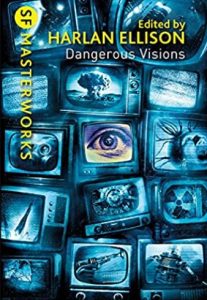
 They loved history, the Landmark books for young readers, and later James Michener, Bernard DeVoto, Irving Stone, and after that, A People’s History of the United States and learned from these that their experience was shaped by larger forces in the world. Of Human Bondage, taught them about the power of being exactly who you are. Science fiction, Dune, Phillip K. Dick, and Harlan Ellison’s Dangerous Visions, taught them complexity and that there was no limit to human imagination.
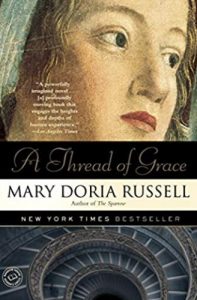
The Handmaid’s tale taught them about the societal constructs that bind women and the inherent and systemic damage engendered by a legacy of patriarchy that continues to challenge us to heal as both a country and a member of a global community. From Tony Morrison’s Beloved and Mary Doria Russel’s Thread of Grace they learned how we all view history is viewed through different lenses and as we encounter and integrate other’s stories, our own vision and stories widen to become wiser and more inclusive.
Through stories of transformation, wonder, and the magic of being deeply human, we learn and evolve as both artists and citizens of our ever-changing and ever-transforming world.
Editor’s Note: A. Molise is a writing collaborative.