
 My first impetus towards reading was the profound, fuzzy-edged discomfort of curiosity. It wouldn’t let me rest, steering me giddily through lumpen Sundays. I would scan my parents’ bookshelves, or those of the local library, pondering the mysteries of cover and title. My selections were often random. Obstinately, I read Shakespeare too young and absorbed almost nothing. I took a turn through 19th century children’s literature, where the unnerving weirdness of Pinocchio gave me a taste for speculative fiction that sent me spiralling gloriously into Stephen King.
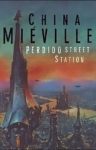
A little later I sought even greater variety. I devoured the genre-bending high concept work of China Mieville. I admired how Toni Morrison and Philip Roth entwined the personal and political – the state and the psyche – in their own different ways. I discovered Alice Munro’s knack for articulating little, brittle experiences, and Kazuo Ishiguro’s meditations on repression; they both made me rethink my Bard-induced penchant for reading spectacular prose.
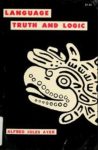 The same curiosity drove me to non-fiction, too. I remember my eyes snagging on a book called Language, Truth and Logic by A. J. Ayer (TL; DR: it defends the principle of verification, the idea that only empirically verifiable statements are meaningful. Goofs: the principle of verification itself is not empirically verifiable). Ayer’s intellectual austerity stood in stark contrast to the multiplicities of literature, but his book began a lifelong fascination with philosophy. I enjoyed thinking about philosophy so much, slowly picking through its heady concepts, that I later became an academic.
I also wrote stories as a child. My first was called The Lion’s Tooth and the Diamond. Handwritten in loopingly illegible text on yellowing paper, it had the dubious distinction of being utterly unpunctuated. I continued to write throughout my teenage years, penning things too awful and derivative to describe, which return to me in the shower as shameful memories.
After university I took a break from creative writing to focus on academia – for more than ten years. More recently I felt the overwhelming desire to write fiction again. Why? I suspect it is because I find it hard to read without writing. Because I am unable to love stories from afar; because of the burning, desperate, un-aloof need to participate. Though I fear that answer, untestable as it is, would not satisfy Mr Ayer.