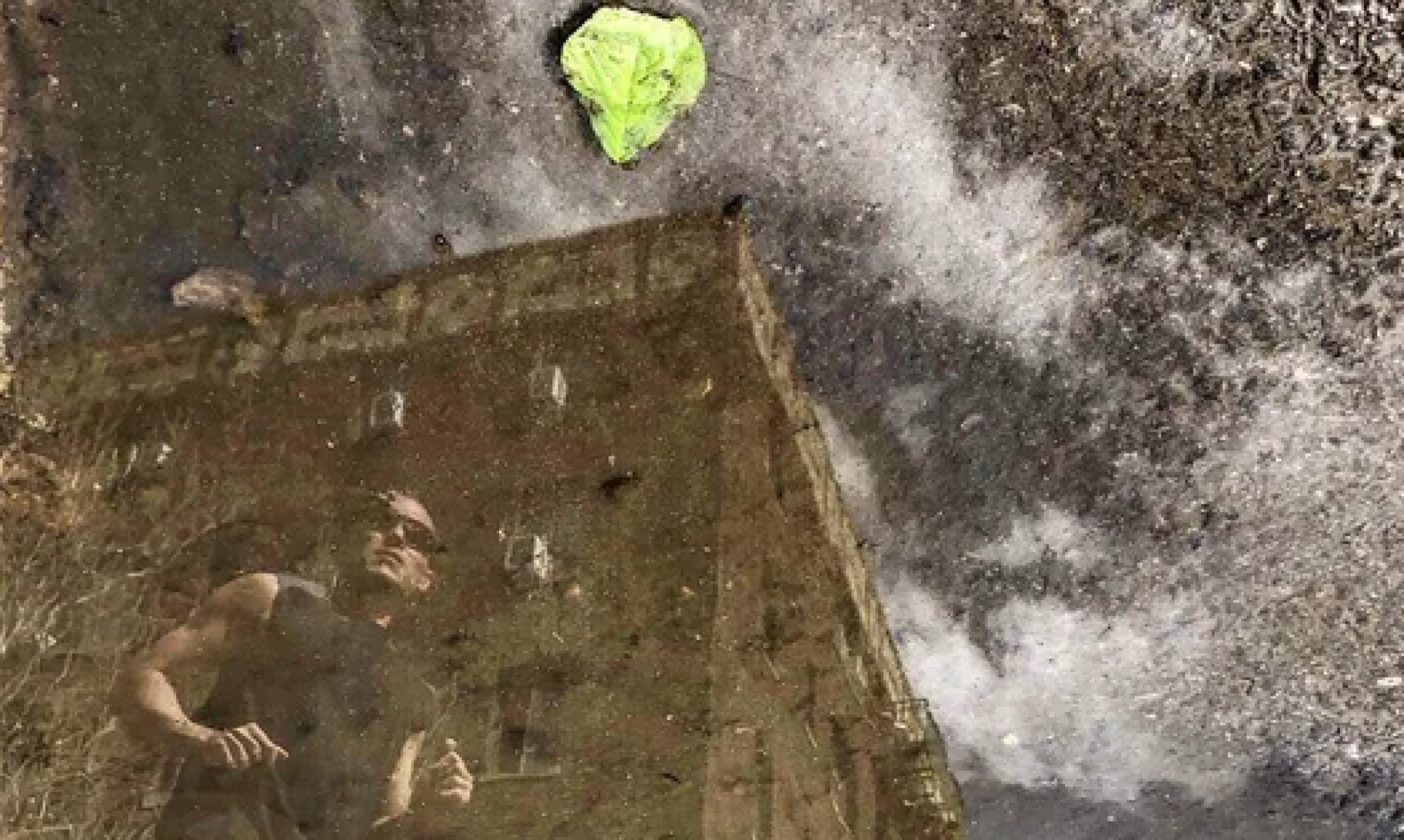

But all about there were bones lying in the grass, clean bones and
stinking bones,
Antlers and bones: I understood that the place was a refuge for wounded deer; there are so
many
Hurt ones escape the hunters and limp away to lie hidden; here they have water for the awful
thirst
And peace to die in; dense green laurel and grim cliff…
from The Deer Lay Down Their Bones by Robinson Jeffers
_____
Minute late and a dollar short. Story of my life. My dad loved to toss around that expression, with comic irony, because he was rarely a minute late nor a dollar short. He spent his life as a career oil company executive who rose to become President of Texaco, Inc., U.S.A. But at the end, disappointment. After years of aiming for C.E.O., when the position became available, he was passed over. The Board of Directors favored a two-headed system in which the C.F.O and C.E.O. had equal power. Both positions were given to younger men with Bachelor of Science degrees. This time he really was a minute late.
The company relieved him of his duties as president and moved him sideways and down. I don’t know what his new title was. He never mentioned it and I never asked. It didn’t matter. He retired soon after. He and my mom were driving the backroads of Vermont, near his cherished alma mater, Dartmouth College, when, according to my mom, he pulled over at a rural gas station, picked up the pay phone in the parking lot, put in some quarters, talked briefly with whoever was on the other end, returned to the car, and announced he’d put in his notice.
He knew the evils of the industry, but even long after his retirement, when I’d try to tease corporate secrets from him, he refused to spill. He had reached for the American Dream, achieved it, owned Buicks and Cadillacs, put two of his sons through Dartmouth as legacies, put up with my rebelliousness in wanting to attend the much less prestigious University of Vermont, and landed himself, finally, just shy of his goal.
That final disappointment in a long, dedicated career served me well. He had never understood why I wanted to spend my time pursuing theatre, especially because he’d seen me act, and knew I was mediocre at best. But during a life changing summer, I’d written a couple of plays, and not a minute late or a dollar short, I was offered a slot at NYU’s Tisch School of the Arts Dramatic Writing Program. More prestigious than UVM, my dad was impressed. Stung by working for The Man for his entire career only to be flung aside, slighted, made irrelevant, my path made more sense to him.
A few months into my father’s official retirement, preparing the condominium in Stamford, Connecticut for sale before my parents’ permanent move to Palm City, Florida, we sat down to dinner in the small kitchen with my mother, enjoying a specialty of hers she called Greek Hash. My dad sipped his second Black Label Scotch of the evening, looked philosophical as he stared inward at a life, successful by most peoples’ standards, but to him, unsatisfying.
“You’re doing the right thing, son,” were words I’d never needed to hear from him but the difference between needing and wanting struck me. He continued, “Don’t enslave yourself to a corporation that, in the end, doesn’t really care about you.”
“Oh, here we go,” my mom was probably tired of hearing it, but added this directly to him, “So you’re finally proud of your kid?”
“I’ve always been proud of Rick… Steve… Mark,” he often fired off all three names of his sons, knowing he’d land on the right one eventually. He had difficulty with names in general, a trait I’ve unfortunately inherited. “I understand his position.” He turned to me. “Follow your heart, son.”
“Thanks, Daddio,” I said, sincere, but with a mischievous grin. My dad was a man who let us know how much we were loved by the scale of his teasing. I’d learned how to tease him back. I asked him, “What are you going to do with your days now that you’re not peddling the Texas Tea?”
“I’ve made my contribution. I’m done.” He waved his right hand like he was dismissing an entire life.
“Oh, please. I don’t like to hear this.” Mom said, brow furrowed, the corners of her eyes creased, the edges of her lips turned down.
“What do you mean, done? Like done done? With your life?” I was curious about this feeling of his.
“Yes,” he said. He rubbed his hands on the table. It was a tell, his whiskey buzz settling in.
“So… what, Dad… you’re going to drive up to Hanover, wander off in the woods, find a ledge next to the river, lay down your bones, and expire?”
After a long pause, a caricature grin spread across his face, and he burst with delight, “That’s a great idea!”
My mom shook her head. “Oh, for goodness’ sake.” A twinkle in her eyes, recognizing the humor of it, but worried I’d put an idea in his head, she said to me, “Thanks, a lot.”
“What about your grandkids?” I wanted to shift his perspective from corporate disappointment to apple-of-his-eye hope for the future. A reason to live and thrive.
“They don’t need me. They’ll figure it out.” He picked up his fork, speared a cherry tomato from his salad, sprinkled salt on it, and enjoyed the explosion in his mouth as he bit into it. “You never listened to me. Why should they?” A dash of truth in the tease.
_____
My father never wandered off to die on a ledge next to a brook. But less than ten years after that night in the Connecticut kitchen, he drifted into a coma. The gurney was on the second floor of their home, overlooking the St. Lucie River, at Harbour Ridge Country Club, a gated community popular with Dartmouth graduates. He had ignored persistent pain and an overactive need to pee as the cancer in his bladder grew to eventually block his ureters. After what initially seemed like a successful battle against it, the cancer had metastasized into his lungs.
My wife and I arrived on a plane from Colorado two hours after he slipped out of consciousness for the last time. I didn’t get there in time to say goodbye.
“I love you, dad.” I hoped my words would find their way through the coma’s thick muck.
During cocktail hour, martinis in hand, we, his family, told him to let go, we had his back, Mom would be cared for. He chose that time to leave. He loved catching a buzz before dinner.
Re-embracing Catholicism near the end, he had apparently confessed to a priest who’d come out of the room pale and shaken. My father had stories and sorrows. But he and I left nothing unfinished between us. No regretful comments. No hurt. Nothing needed fixing. He adored my wife. She adored him. He and I had become friends as adults.
My mother told me in his final conscious moments, before shutting his eyes for the last time and settling into that final coma, he squeezed her hand and said, “On to the next adventure.”
*****
After a career as a stage director and new play developer, Mark Routhier lives and writes in Freeport, Maine. He recently received his MFA in Creative Nonfiction from the Vermont College of Fine Arts. An essay from his collection, Short Essays About Lost Friends, was recently published in Wilderness House Literary Review. It was his first publication. “White Lines” in Coachella Review will be his second. “Daddio” is his third creative nonfiction publication.
