 I am the daughter of storytellers. My parents loved spinning tales about their childhoods, and I loved to hear them, the juxtaposition between their two experiences clear to me even as a young child. My father grew up in a handful of mill villages across North Carolina, the youngest son of an alcoholic father and a devout Christian mother. My mother was near royalty in her tiny South Carolina town, her father a much-loved entrepreneur and one-time mayor, her mother everyone’s favorite English teacher.
Mama’s stories were funny and full of eccentric characters, like a lady named Fanny (yes, actually) who walked around town in nothing but a fur coat and flashed unsuspecting passersby. She didn’t just tell me stories about her life; Mama told me stories about the windowpanes she was washing and what each one’s name was, and she had dozens of adventure stories for a child protagonist about my age to go on when it was bedtime.
Daddy’s stories tore at me, like the one where he got sick at school when he was in the 4th grade, and his teacher, whom he had a crush on, drove him home when neither parent could leave work to get him. He was so embarrassed for her to see his house, that he tried to get her to drop him off blocks away. She wouldn’t, and she saw the shack he lived in, a humiliation he still felt decades later.
Daddy didn’t make up stories, but he made up several characters (whose names I no longer remember) who might, without warning, animate as he was sitting in his recliner, and one of them might grab my brother or me as we walked by and put us in any number of fictional wrestling moves, like the Upside Down Hold, the Sideways Pretzel Crunch, or the Over-the-Shoulder Twist. It was a magical childhood. My parents’ imaginations sparked a flame in my mind through the cadence of their voices and their natural gift of narration.
My mother says I was a voracious reader even before I was actually literate. I would get her to pull a stack of books off my shelf and sit for hours, making the stories up by looking at the pictures. I remember a lot of Golden Books were in my collection. I think the first story I ever wrote was about a girl detective from Tallahassee named Jenny.
 I had probably devoured at least a dozen or so Nancy Drew books by this time. Next, was the Sun Valley High series, which birthed quite a few sibling/best friend duo tales sprinkled with thinly disguised love interests of any boy I had a crush on. It wasn’t until my senior year, when I found myself in the AP English class of the most formidable teacher at my high school, that my literary horizons really began to expand.
Many a kid at Olympic High regarded getting Ms. Furr for English in the same light as a prison sentence, but for me, it was the best part of my day. Ms. Furr introduced me to Shakespeare and Chaucer, Edgar Allen Poe and Flannery O’Connor, Toni Morrison and John Steinbeck. Near the end of the year, I got up the courage to share with her a mystery I’d written (a Mary Higgins Clark phase), and while even though I long ago misplaced it, I know without ever laying eyes on it again that it was cringe-worthy. Ms. Furr didn’t treat it as such, though. In my yearbook, she wrote, “I want first edition copies of all bestsellers”.
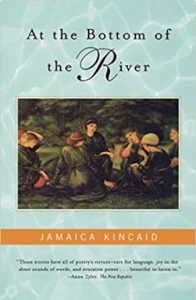
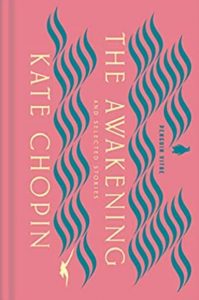
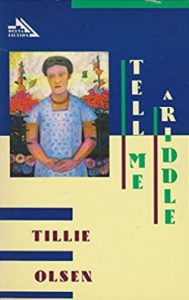
My junior year at UNCC, I took Fred Leebron’s “Writing Fiction” class, and again, the literature I was exposed to made me think, over and over, I want to write like that. Jamaica Kincaid’s “Girl”, Kate Chopin’s “The Story of an Hour”, Tillie Olsen’s “I Stand Here Ironing”, and Virginia Woolf’s To the Lighthouse are just a few I know deeply affected me. I was beginning to look past formulaic romance/mystery styles and starting to realize that I might have something unique and important to say.
Years later, I had the pleasure of working with Fred again when I was accepted into the MFA program that he helped found at Queens University of Charlotte. Just as when I was an undergraduate, Fred served as a mentor, offering invaluable criticism and teaching me the techniques I needed to not only keep writing, but to get better at it. During those two years, a few of the authors I was also fortunate to work with or learn from were Robin Hemley, Elissa Schappell, Heidi Jon Schmidt, Elizabeth Strout, and Ron Rash.
In the years that have passed since earning my MFA, it’s sometimes a challenge to keep my writing aspirations from getting sidetracked. I wish I could say that I write in my office for a set time every day, but it’s more often for whatever time I’m able to snatch, while I’m sitting in the school pick-up line or waiting for volleyball or lacrosse practice to end.
 I’m still finding inspiration in literature, and now it’s often Children’s or Young Adult lit I read with my children. Jacqueline Woodson, Jasmine Warga, and Barbara O’Connor are among my favorites. I’ve snuck away to a couple of Writer’s Conferences, and got to be a Writer-in-Residence last year at the Weymouth Center in Southern Pines, NC. But mostly, it’s just me juggling my daily responsibilities and hoping to jot down a few lines of something I’m working on before all the hours of the day are used up.
I lost my dad a few months ago. Mama’s dementia is getting worse, her memories slipping away. But their stories are still alive in me, and when I remember that, I also remember why I keep carving out the time, however small, to devote to my craft. Because I’m the daughter of storytellers; it’s in my blood.