
 My mother began reading to me when I was old enough to sit on her lap without sliding off. Reams of poetry — Emily Dickinson, Walt Whitman, Robert Frost, Amy Lowell, Alfred Noyes (for the rhythms and the stories), James Whitcomb Riley (because my mother was from Indiana), Edna St. Vincent Millay (because my mother admired and emulated her). And prose — the Doctor Doolittle stories, the Winnie-the-Pooh books, Cheaper by the Dozen, We Have Always Lived in a Castle, The Borrowers, Mary Poppins. She wrote poetry and let me read her notebooks, which I still have.
By the time I was 12 or 13, I was writing my own stories and poems. Seeing that I was serious, my parents bought me a typewriter, an old Royal that in memory seems as big as an upright piano. It took real strength to depress those keys. I taught myself to type with two fingers on the stiff keyboard and still type that way today, after careers in teaching and journalism producing hundreds of thousands of words.
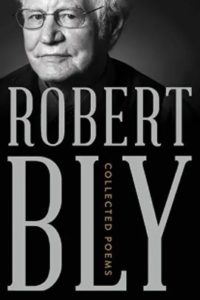
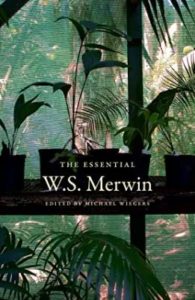 My first poetic hero was E.E. Cummings, and I composed many poems that consisted of words broken into syllables slanting down the page. Then the Beat poets — Corso, Ferlinghetti, Ginsburg — and my work became angry, surreal, goofy, existentialist. Next came the influences of Pound and Eliot. I began making use of French and German dictionaries so I could lard my poems with pertinent intellectual baggage. Once I reached college, I started reading the poets who had a profound influence on me and still inform much of my thinking about poetry — Robert Bly, W.S. Merwin, Mark Strand and, of a previous generation, Elizabeth Bishop.
Growing up in Memphis, it was inevitable that I would read the fiction of William Faulkner and Eudora Welty. When I was a senior in high school, I dropped physics on the first day and asked to be a hall monitor. I spent that school year, from 11 to noon, hassling kids who had forgotten their passes and reading Flaubert, Sartre, Kazantzakis, Thomas Mann, Zola, as many European writers as I could check out from the library. Of course I was enthralled by The Catcher in the Rye and by William Goldman’s early novels about teenage angst, Your Turn to Curtsey, My Turn to 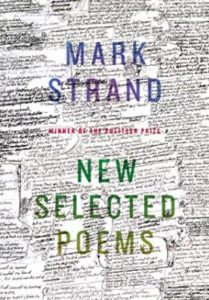 Bow and The Temple of Gold. I made deep forays into science-fiction, especially the writers of the 1940s and ‘50s. I read Ray Bradbury’s The Martian Chronicles and Arthur C. Clarke’s Childhood’s End over and over.
In other words, I read everything I could get my hands on, allowing one novel to lead me to the next novel, one book of poetry to lead me to another. I still do that, decades later, reading late at night, with a dog sleeping by my side. I read books I should have read years ago; books I read years ago and want to go back to; contemporary novels and poetry collections that catch my imagination. All this reading informs my writing, creating breadth and depth in my thinking, opening possibilities in narrative and pacing, relationships and momentum, factors that feel unconscious and subliminal.
The psychological and emotional elements related in these brief paragraphs reinforce what I think about every day, what I believe in most: words, language, books, reading, writing.