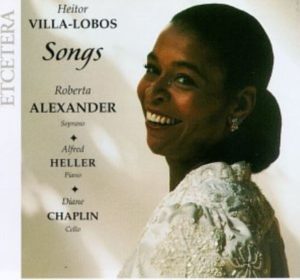
 I’m sequestered at home while writing this essay, listening to the songs of Villa-Lobos as performed by Roberta Alexander, and musing that our rooms should be set up as stage sets that can be altered to fit the art we love. For me, a room for these songs would be a white cube with a spare arrangement of upholstered seating, polished hardwood tables and floors, shelves for the always-books collection. Sheer lavender curtains. Open doors to a balcony. Breeze. The bodega on view below. People-watching while I listen.
Do the songs of Villa-Lobos belong in the canon? Then it’s a very big canon. So why not: no canon?
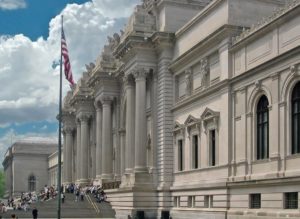 MoMA Now is “now” supported on a wastebasket by my desk because you could weight-train with this book. I’m not weak, but it’s a strain to pick up the book, which demonstrates, which screams, that there is no canon. (Pull down your Corinthian columns Metropolitan Museum, and level those processional entry steps. Metaphorically, of course. I love old school also, but I don’t want to live there.)
Thomas Kuhn, in The Structure of Scientific Revolutions, councils us that there is a paradigm-shift-time when one model of reality, proving to be increasingly unworkable, is replaced with another. But you are going to hold on to your old model, a life raft, until there is a replacement. We all need to have a home. Heimat. I like the German word. Home, homeland, native country.
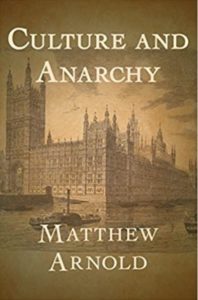 Let’s go all Mathew Arnold-like! In Culture and Anarchy, M.A. talked about the need to participate in the national life by the appreciation of “touchstones”, the best that had been thought and said. See the problem: the best that can be thought and said ends up being the reactive triad: white, male and straight.
Cover your eyes if it’s not that, or put in the hallway, or ghetto it in a special section. Or worse. Assume it’s WMS if it’s good. Or worst. Make it invisible. The worse censure is saying odd fish: because you’re the one who represents normality. The worst censure is saying I don’t exist, even when I’m standing in front of you.
MoMA Now includes the works of over four hundred artists. I got seasick at first when I realized that Picasso and Matisse each are represented only a couple of times, and Leger and other touchstones once among over four hundred creatives. That means the MoMA curators have blown up the canon.
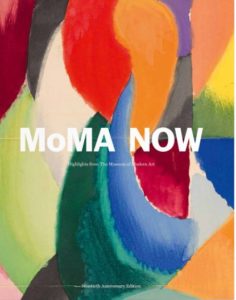 Moreover, this 90th anniversary survey of MoMA is a snapshot of their more than two hundred thousand works of art. Every six months, one third of the collection on display will shift. Picasso’s Demoiselles of d’Avignon , Matisse’s Dance (I), Monet’s Water Lilies, Warhol’s Campbell’s Soup Cans will probably stay, as nodes of reference, as driftwood of a lost canon. Maybe that’s a sign that someday the canon will be restored? I doubt it and don’t want it.
What we have instead is a creative wave. Go to Jones Beach State Park to look at the waves. (I’m thinking: Bondi, I wish!) Is there a touchstone wave? There shouldn’t be. If you surf, you may remember the arching curves of exceptional waves. But the point is to be on the water.
Before I was exiled from the new MoMA by COVID-19, I was punch drunk surfing the art, knowing that the weather would shift six months later. The atmosphere would change; there would be new video to watch, new films, new paintings, new installation art. New themes in the galleries. And I would change, making both the old and new, newer. I would miss the replaced things but look forward to new experiences. The new MoMA was one expansive, walk-in, Criterion streaming channel. The presentations would change. It would all be good.
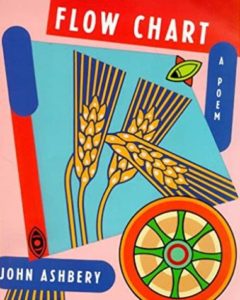 That’s the paradigm that replaces the canon. MoMA Now is the new survey of its collection. Paradigm’s tome could just as well be fifty other MoMA Nows. Print is limiting that way but the limitation is liberating for the moment. You can focus but know there are other realms to explore. The overriding sin is lack of curiosity. That’s like reading a book. It’s not the whole library. My library isn’t the only one. Isn’t it glorious to think of all the libraries, all the beaches, there are in the world? John Asberry wrote the “on extended wings” (Helen Vendler quoting Wallace Stevens) poem, Flow Chart. William James wrote that consciousness was like a bird alternately flying and perching. A character in a Kafka parable said that it was your gate and only you could walk through it.
Learning to live without a canon? You bet.