
Poets emerge from young heartbreak. Right? At least, that is where I and many others love of writing stems from. Deep in my world of sappy love poems and devastating lyric pieces, I saw poetry as uniform, one-note, only able to aid me in certain circumstances.
At a point in my early poetic development, I stumbled across the legendary work of Karen Finley’s Shock Treatment. When I tell you I tore through that book, know it’s not an understatement. Finley perfectly captured my angst and aggression, helping me move my aggression from petty, teenage heartbreak to using my grief and anger as catalysts to shift real-world thinking on race and sexuality.
Shock Treatment was my first introduction into, what I deem, political writing – poetry, essays, and monologues turning the realities of marginalized communities into masterful works of word. The visceral depictions of egg yolks cracking against scalps and squishing nuts under a heeled boot all showed me that I could use my morbidity to create pieces that captured my lived experience in its full glory.
Poetry, commonly believed to focus on finding beauty in the mundane, does not always need to air on the side of safety or use flowery language. I believe, as writers and readers, we benefit from reading the real aspects of our world. Of course, anyone can find beauty in a flower, but what about finding beauty and joy in a line of tombstones with accent marks, or even a trash heap shaped into Mickey Mouse? Because of Finley’s writings, I have found the extreme importance in sincerity when it comes to my writing, and that sometimes sincerity is disgusting, gross, and repulsive – which all go to make it even more interesting.
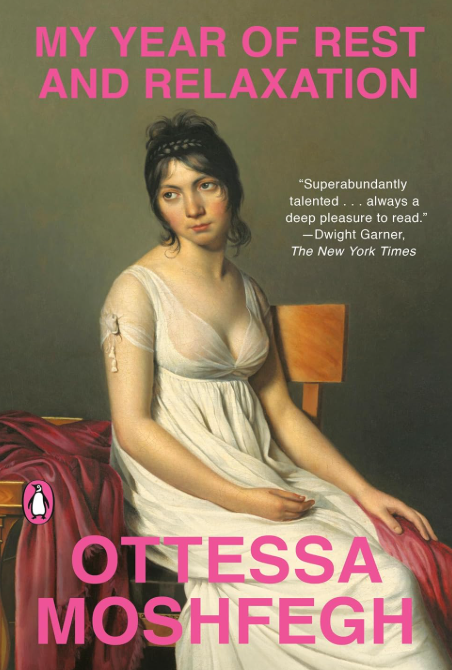
With so many poets and writers impacting my own creative development, it would be impossible to not bring up the iconic writer Otessa Moshfegh’s 2020 novel Death in Her Hands. Having been a fan of Moshfegh after reading her 2018 novel My Year of Rest and Relaxation, I can define Moshfegh’s work as raw, defiant, and masterfully unhinged. Her stories and characters are so authentic, I caught myself rolling through the emotions with them.
When it comes specifically to Death in Her Hands, this work completely altered the way I write, merging elements of horror with the realities of living. This, compounded with the major impacts of Finley’s writings, has shifted my poetry to be more willingly horror-adjacent while connecting to the political.
Living as a queer, person of color in the midwest, my daily experiences are, at best, trivial, and at worst, borderline horrifying. Why shouldn’t those same feelings live in my work?
*****