
Philately
After The Collector by Norman Rockwell (US), 1971
My father cramps his hobby into his basement office. He’s lined the narrow shelves with Scott’s philatelic catalogs, boxes of glassine envelopes, and cellophane hinges. On his green blotter rests his magnifying glass and his lazy Susan of rubber stamps for each of the businesses he’s made up, including the Emkay (his initials) Stamp Company. The room has the scent of inkpads. Across from the desk is the IBM Selectric with the Courier ball. All he has to do is turn around in his swivel chair and type up his inquiry to a wholesaler about certain issues to round out his collections. He keeps his albums in the locked metal cabinets lining an entire wall.
My father has been collecting since his boyhood, scuttling out of the family apartment behind their general store and down the stairs to his private space, away from the store and his three siblings. Away from the living room sofa where he sleeps with his two brothers while his baby sister gets the second bedroom. He’s been in the procurement business since he was six, running delivery errands for his parents, pulling his baby brother in a red wagon. Since his war years as quartermaster for the 398th Bombardment Group of the Eighth Air Force of the US Army Air Corps in England. Since his immigrant mother taught him how to keep ledgers and how to haggle.
My father sets me up with a desk, a present from his father, in the basement’s great room. I have my own magnifying glass, my own albums to collect American, Canadian, Polish, Israeli, and flower adhesive squares of history. Even at age ten, I am a sophisticated philatelist. I collect countries and topicals. There is no premanufactured album for flowers. I make my own stock book. We go down into the basement together and he enters his office to the right and I go to my desk to the left. We hobby apart but we’re close enough that I ask him questions: What color is vermilion? What does unwatermarked mean? Do I get a prize if I fill up the entire album page?
There’s a sure way to complete an album page: stamp shows. My father takes me to shows in Atlantic City and Newburgh, New York. Enormous exhibit halls with hundreds of black table-clothed booths and the din of deals. My father spots miniature stock books with a Take One sign.. An opportunity not to pass up, he pushes me toward the wire rack. I know the drill. Get as many as possible and slip them into his attaché without anyone noticing. No one pays attention to a kid amid all this hubbub. He looks at his watch. Gives me a meet-back-at-the-concession-stand time. With piggy bank money in my pockets, I walk the aisles of the stamp show like a grown-up. I’m somebody. Tables and tables of dealers displaying their prized merchandise. I sit down at a table. I pull out my list. I’m no kid. I know what’s what. I ask the stamp dealer if he has the Canadian two-cent 1915 war tax stamp in carmine. The Polish 1958 Tarnow Town Hall 60 groszy stamp in dark blue. I might as well ask for the Zamosc Town Hall 2.50 zloty stamp, too, in violet.
I am mindful that my interest in Poland stems from my grandparents born in Poland. I am mindful of just how much I can afford. There’s always a box of prepackaged stamp lots for the less discerning stamp collector on a budget. Or a quick dash to find my father so I can tell him how much I need this stamp. I swear to pay him back. He opens his wallet. He and the dealer wink at each other.
After my father’s death, my brother-in-law, a specialist in baseball card collections, arranges for the sale of my father’s collection. Now I collect my memories of him.
***
To the Young Couple Parking the Peugeot, Brussels
Was it fate that an hour ago I saw you squeeze your Peugeot into a tight parking space on the narrow cobblestone street? You, dear young woman, dressed in a slinky green metallic dress with slinky gold sandals, holding a bouquet of flowers. You, dear young man, dressed for a summer evening out on the town in crisp slacks and button-down shirt, carrying a bottle of wine. It’s likely you were headed for a friend’s flat when I asked you, “Do you speak English?” You said you did, but you really didn’t.
I must have looked so pathetic to you. A middle-aged American woman, sweating profusely and wearing a backpack, struggling to walk. Because of the language barrier, I couldn’t really tell you what a harrowing day it had been.
It started out fine. From the Hotel Hubert on rue d’Arenberg, across from the Galeries Royales Saint-Hubert, I walked two blocks, a right and straight on, to the day tour’s gathering place in front of the Brussels Hilton and Central Station. Our first stop on our luxury motor coach was Bruges. Even in my New Balance sneakers and compression socks, my steps on cobblestone became unsteady and slow. After about half an hour, the tour guide asked, “Your face is so red. Are you okay?” I shook my head, and I appreciated that he took the time to notice. No wonder his tours earned so many stars in online reviews. A physician in the group bought me an ice-cold bottle of water. A nurse sat down with me in chairs laid out to welcome lunchtime tourists. She loaned me her personal fan. I had been unaware of my physical limitations.
I was melting right there in front of everyone in Bruges.
After a carbonnade lunch at a café, I struggled to find my way back to the bus parking lot. The tour guide had said to turn at the fountain with the horse’s head. It sounded so simple. I had no address to plug into my cell phone, which was on its last legs and had to be recharged three times a day. I shlepped down alleys, wondering who might speak English, whom I could ask for help. I plotzed on a bench and swallowed my tears. I heard some people speaking English and I followed them quietly. They inadvertently led me to the gathering place. The tour guide was relieved to see me. He had been worried. “Me, too,” I said.
I recovered on the next leg of the trip to Ghent. When we arrived, the guide led us around the Romanesque St. James Church across from where the bus let us off. He said to me, “I’m going to take the group around the city. But you, please, stay here in the marketplace.” And so I did. I wanted to see Ghent, but now I knew my body couldn’t handle it. I ambled to Jaggers, an outdoor café, ordered mineral water and a bite to eat. I looked out to the marketplace and saw our group’s nurse sitting on a bench. I invited her to join me. Like me, she was an American and a cancer survivor. She waved over her sister and niece, and we made a party of it, drinking beer and sharing Belgian fries. Our waiter loaned us his spritz bottle-fan, the kind you’d find at Disney World.
The bus returned us to Central Station. I knew it was a two-block walk back to my hotel, but I must not have navigated well. My phone was now dead. I ended up on some main thoroughfare, long ago exhausting my required 10,000 steps for the day. All I saw were steps. Concrete stairways up. Concrete stairways down. My legs screamed in pain. My ankles swelled. But I kept walking, telling myself I would find my way. After half an hour, I had to admit I was hopelessly lost. I continued to drag myself along, and then I saw you, dear couple.
You were a godsend. You took pity on me. You looked up my hotel on your iPhone and used your GPS to get me back there. Dear young man, your frequent “Ça va?” your continued but concerned smile as I tried to keep up with your youthful steps, comforted me. Maybe I reminded you of your mother or grandmother. Maybe you thought I’d collapse on the street. A distinct possibility.
I am sorry for delaying your evening. But I wanted you to know how much your help meant to me. I will drink a Virgin Mary to your health until the hotel runs out of tomato juice.
*****
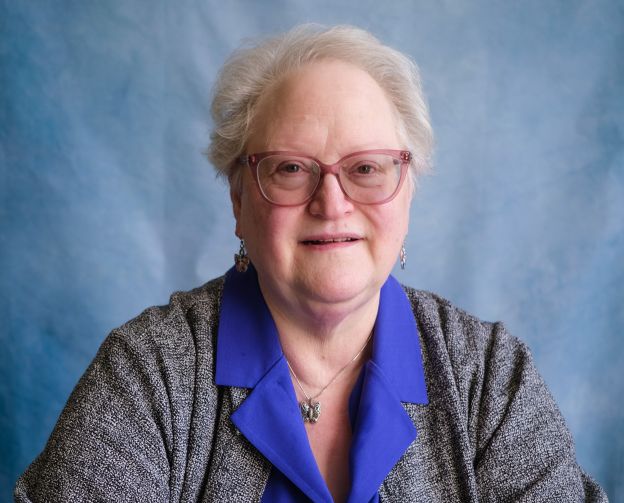
Barbara Krasner holds an MFA from the Vermont College of Fine Arts. Her work has appeared in Cimarron Review, Michigan Quarterly Review, Consequence, Nimrod, and elsewhere. She lives and teaches in New Jersey.